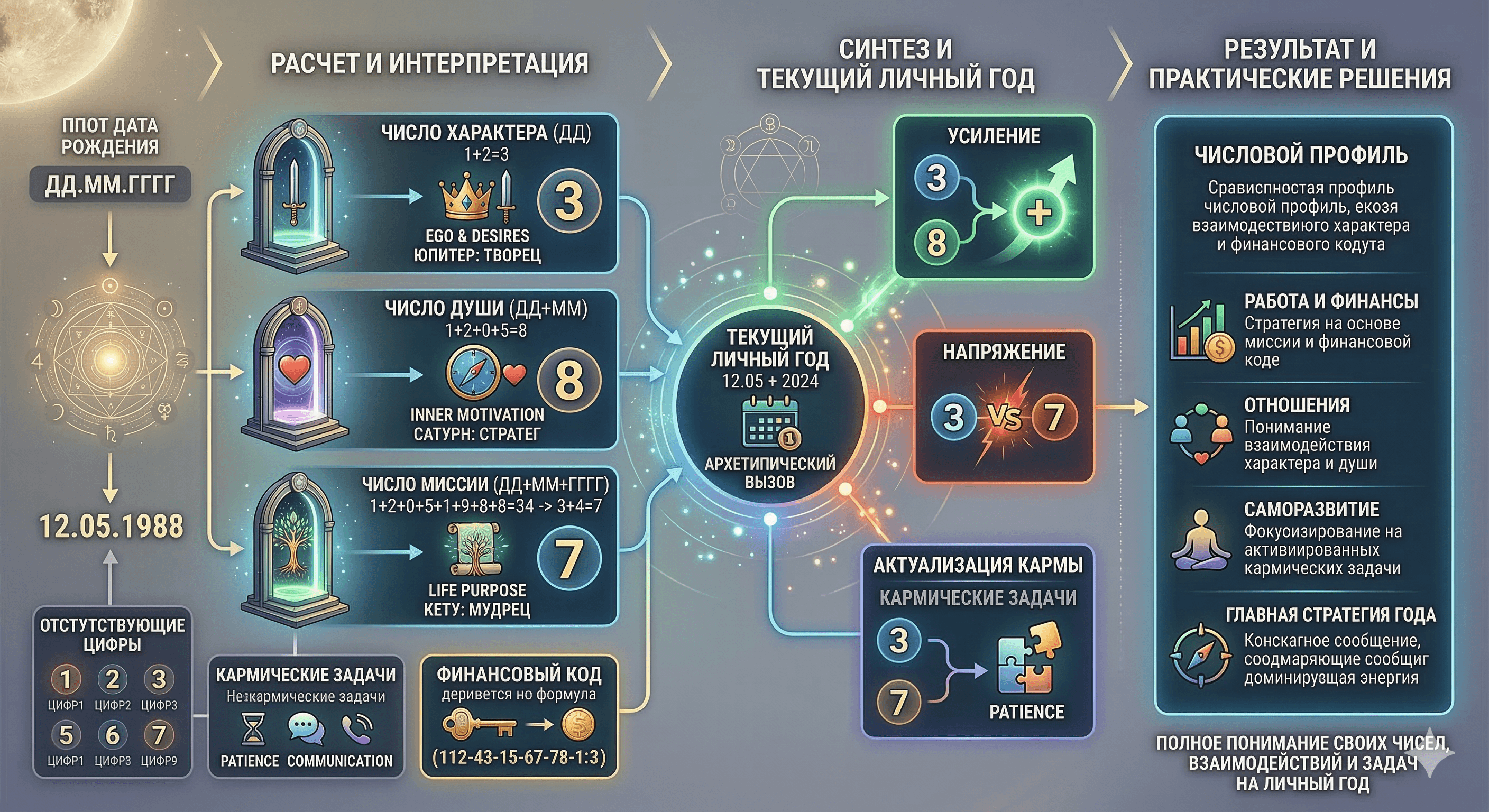
D1D1 Symbolic · Symbolic data: dates, time, place, numbers, names, calendar signs, cards, symbolically obtained answers. An external code through which the system reads a person, event, or time.D0D0 Formal · Formal data: questionnaires, surveys, tests, recorded parameters, statistics, observation history. Everything that can be described, compared, and processed as an explicit set of features.C3C3 Archetypal · Based on symbolic correspondences, archetypes, universal images, and recurring narratives. The world is read through meaning-forms.C1C1 Structural · Based on a stable schema, typology, element positions, and fixed relationships within the system. The world is understood as an organized structure.C2C2 Cyclical · Based on phases, periods, returns, and rhythms. The method proceeds from the idea that much develops through repeating cycles.T0T0 Moment · Here and now. The method works with the current state, a snapshot of the moment, or the entry point into a situation.T1T1 Period · Near time span: days, weeks, months, sometimes a year. The method looks at the current life stage.T3T3 Life Path · The trajectory of a person's life as a whole: from innate structure and key stages to the overall line of destiny and self-realization.F1F1 Diagnostics · Answers the question 'What is happening?'. Identifying the state, structure, imbalance, or configuration of the situation.F2F2 Interpretation · Answers the question 'What does it mean?'. Revealing meaning, inner logic, and hidden connections.F4F4 Navigation · Answers the question 'How best to act?'. Helping choose direction, step, or strategy.F5F5 Transformation · Answers the question 'What can be changed?'. Working with change of state, perspective, habitual reaction, or life trajectory.

 Numerological