
Palmistry (Chiromancy)
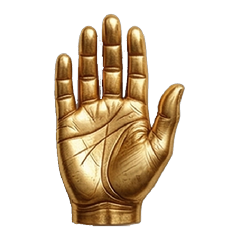 Somatic
7. PALMISTRY (CHIROMANCY)
I. Inner Mode
Method's Worldview The palm and the lines of the hand reflect life energy, character, and the trajectory of fate.
What Is Considered Reality The external form of the hand is connected with inner qualities and the life path.
What Is an Event Within the Method An event is a probable turning point / period, indicated by signs and lines as a "potential" of fate.
Role of the Subject The subject is the bearer of the hand's pattern; their choices can strengthen or weaken the tendencies.
Role of Time Lines and signs are interpreted as indicators of stages and changes — sometimes as dynamics rather than fixity.
Purpose of the Method Diagnosis of character and life periods, reading of inclinations and potential events.
Language and Key Concepts Life line / heart line / head line / fate line, mounts, signs, markings, phalanges.
Principles Governing the Transmission of Knowledge [Principles of knowledge transmission in this tradition are being documented together with method masters]
II. Analytical Mode
Origin Traditional (various cultural branches: Indian, Chinese, European; high variability between schools).
Functional Type Diagnosis (F1), interpretation (F2); forecast (F3) in certain schools.
Data Type D2 — somatic data (shape of the hand, lines, skin).
Interpretation Mechanism C3 — Archetypal (morphological correspondences between signs and meanings).
Temporal Granularity T3 — life trajectory.
Level of Determinism From moderate to rigid — depending on the school and the manner of presentation.
Scale of Applicability Individual.
Limitations Strong subjectivity. Diversity of schools without shared standards. Absence of independent verification of interpretations.
Ethical Risks Stigmatization. Induction of fatalism. Intrusion into sensitive life themes.
Degree of Verifiability Low.
III. Comparative Mode
Intersections by Data Type D2 is shared by Physiognomy and Somatotypology — all read character / fate from bodily form.
Intersections by Mechanism C3 (archetypal correspondence of form and meaning) intersects with Physiognomy and Symbolic systems D1 — the common logic of "outer reflects inner."
Differences in Ontology Reading fate from bodily form — not through cosmology (D1/C2) and not through psychometrics (D0/C0). The body as a "map" of fate.
Differences in Level of Determinism Often perceived as more rigid than statistical psychological models. Can sound like "it is written on the hand," in contrast to the probabilistic language of Big Five.
Areas of Partial Compatibility With body-oriented practices (D2) — only at the level of bodily observation, without transfer of causality. With psychological typologies — as a parallel description of characterology.
Method Info
#7Palmistry (Chiromancy)
Data D2
Causality C3
Time T3
Result F1, F2, F3