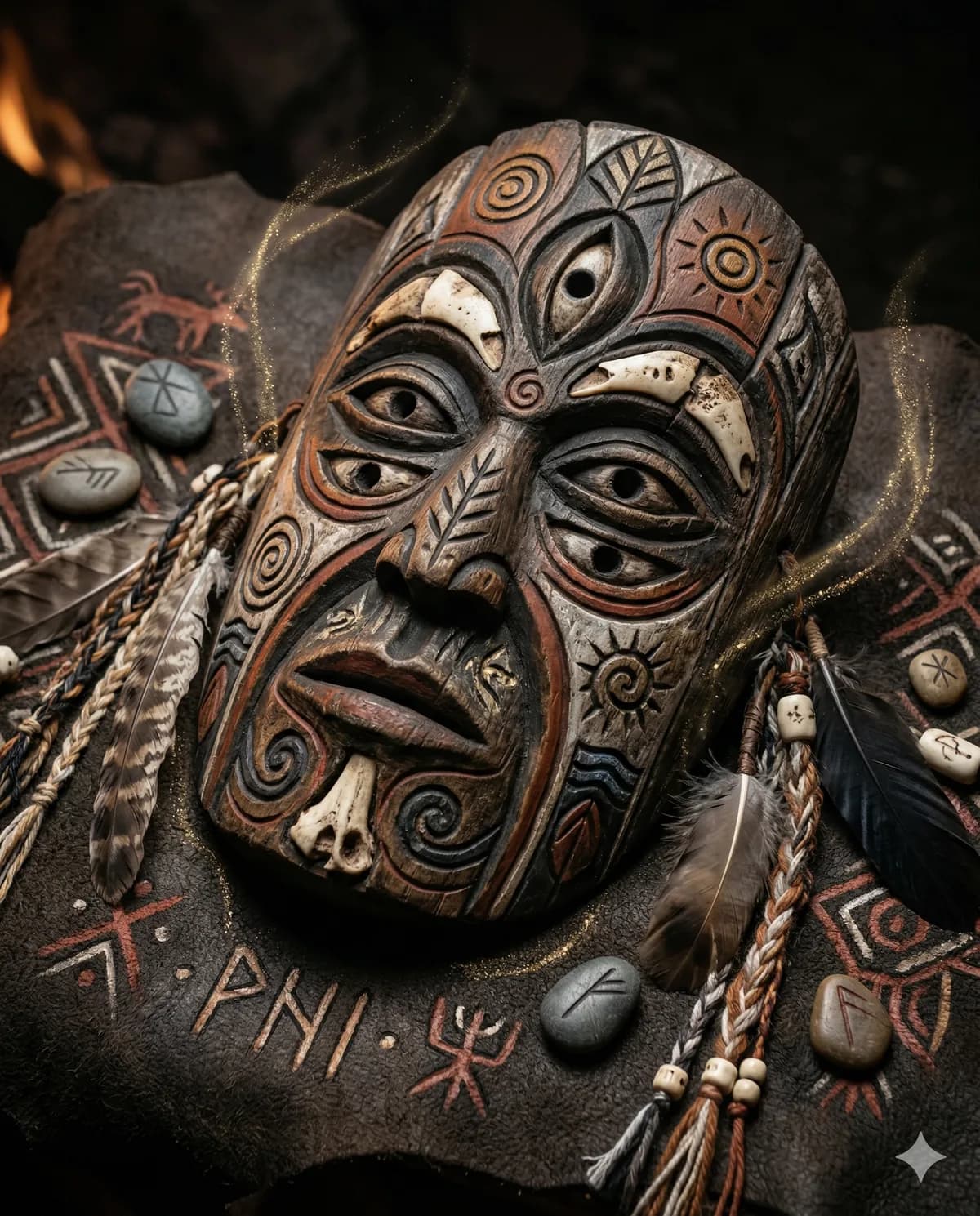
Phi
ผี · Phi (Thai)
RU: Пхи
Phi (Thai ผี, phi) are the spirits of all levels in Thai animism: of nature, of ancestors, of places, of the dead.
Concrete beings. Unlike the abstract archetypes of Jungian psychology (#11), Phi are concrete, local beings with names, characters and territorial attachments. One can speak with them, bargain with them, quarrel with them.
Classification of Phi
The Thai tradition distinguishes dozens of varieties. The main ones:
- Phi Ban (ผีบ้าน) — house spirits guarding the family
- Phi Pa (ผีป่า) — forest spirits, masters of the territory
- Phi Phrai (ผีพราย) — spirits of those who died unnaturally
- Phi Thep (ผีเทพ) — spirit-deities dwelling in shrines
- Chao Thi (เจ้าที่) — spirits-owners of a place, for whom a small house-altar is built (ศาลพระภูมิ, San Phra Phum)
The Ethics of Relations with Phi
Neither good nor evil. Phi are neither good nor evil by default — their attitude toward humans depends on the observance of ritual rules and respect. Honor them and they help; neglect them and they may harm.
Maw Phi — the Intermediary
The shaman-translator. Maw Phi (หมอผี) is a shaman who specializes in communication with Phi. He is the intermediary between the world of humans and the world of spirits.
Significance for Errarium
An ontological category. In the Errarium context, Phi defines the second side of the dialogue in Thai shamanism (#36): the practitioner works not with abstract forces, but with concrete spirits possessing personality.
Translation note
Translate as 'phi (spirits)' — not as 'ghost' or 'demon'. Phi are real local beings with names, not abstract forces. Distinguish from Jungian archetypes (#11): phi are literal beings, not psychological structures.
False friends / common mistakes
- ·
Archetypes (Jungian #11) — intrapsychic structures, not literal beings
- ·
Spirit (generic) — less specific than phi with individual names and characters
Term Info
Cluster Thai
Script Thai